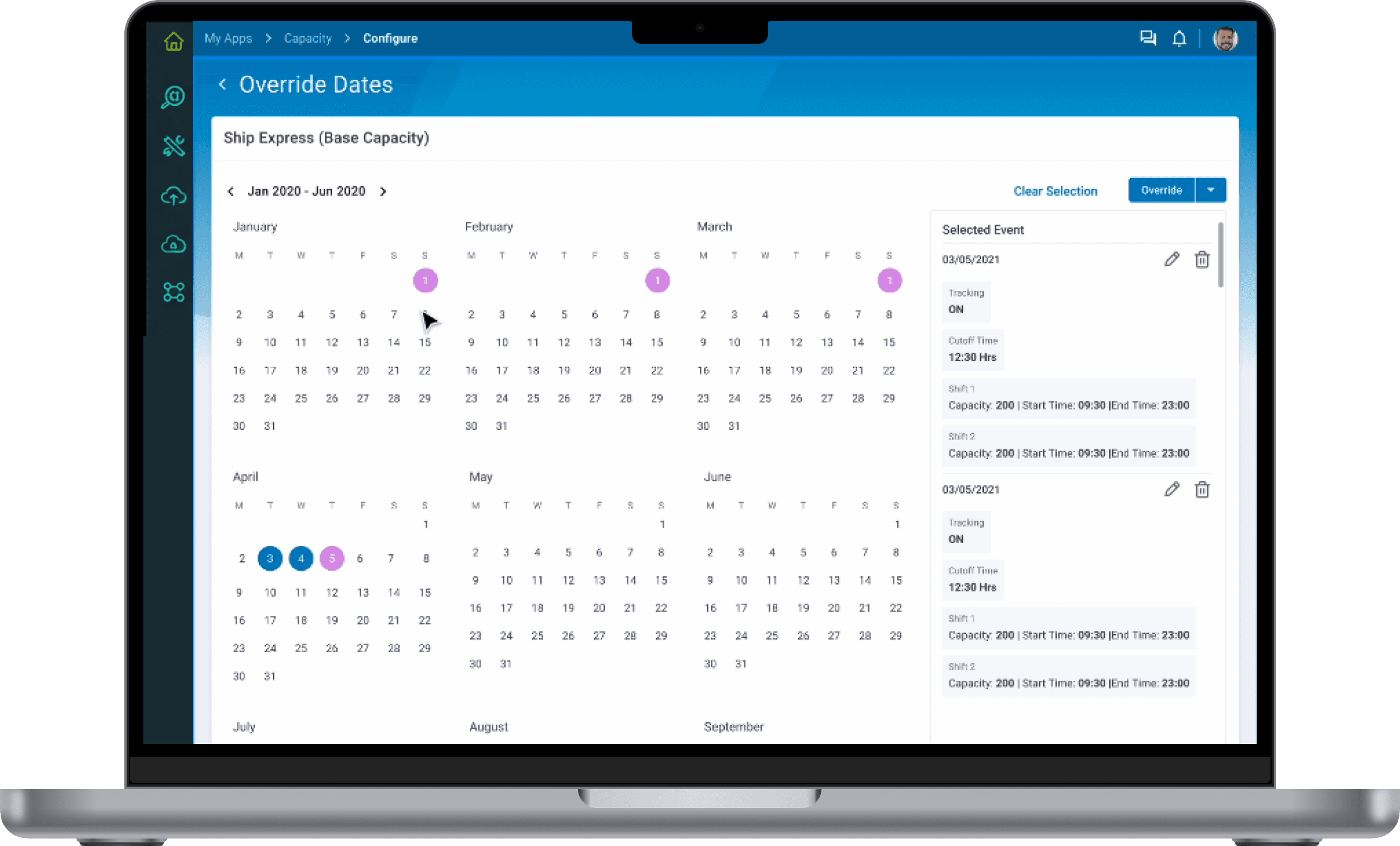
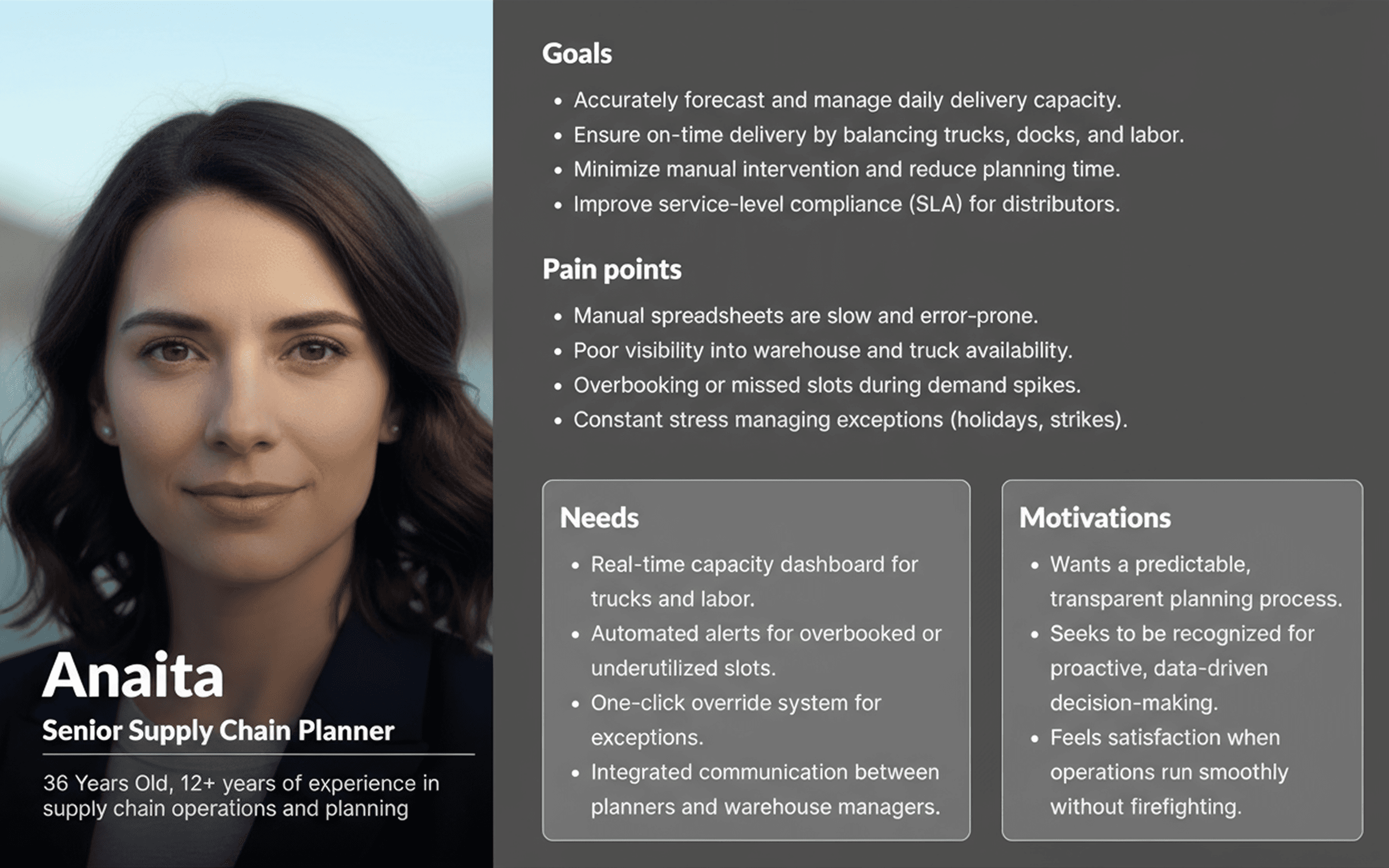
Delivery Capacity System that Cut Missed SLAs by 30% and Increased Planner Efficiency by 2x

Designed for Beyond Blue's Supply chain management. This solution transformed how delivery capacity is managed across warehouses.
It automated manual decisions, optimized slot utilization, and streamlined exception handling -
resulting in 25% fewer carrier delays and 2× faster planning turnaround

Headquarters

Headquarters

Founded

Founded

1985

Industry

Commerce - supply chain management

Commerce -

supply chain management

Company size

7500+

Industry

Commerce - supply chain management

Company size

7500+

Challenge

Beyond Blue is a leading supply chain platform, often struggle with delivery capacity planning, especially during peak seasons, holidays, and unforeseen disruptions. Inefficiencies in this area cause:


  • Overstocked or underutilized warehouse docks

  • Labor mismanagement (idle or overworked staff)

  • Carrier delays and SLA(sale level agreement) breaches

  • High operational costs

The challenge was to design a Delivery Capacity Management UI that helps planners forecast, allocate, and adjust shipping/labor capacity in real-time, while making complex logistics actionable and easy to manage.

Beyond Blue is a leading supply chain platform, often struggle with delivery capacity planning, especially during peak seasons, holidays, and unforeseen disruptions. Inefficiencies in this area cause:


  • Overstocked or underutilized warehouse docks

  • Labor mismanagement (idle or overworked staff)

  • Carrier delays and SLA(sale level agreement) breaches

  • High operational costs

The challenge was to design a Delivery Capacity Management UI that helps planners forecast, allocate, and adjust shipping/labor capacity in real-time, while making complex logistics actionable and easy to manage.

The challenge was to design a Delivery Capacity Management UI that helps planners forecast, allocate, and adjust shipping/labor capacity in real-time, while making complex logistics actionable and easy to manage.

Results

Planners reported a 50% reduction in time spent on daily scheduling with the visual, automated interface. SLA breaches dropped by 30%, thanks to real-time capacity validation and cut-off enforcement. Warehouse managers achieved 25% smoother dock operations with better labor alignment and fewer last-minute changes. Overall, the system increased planner confidence, improved collaboration between planning and operations teams, and set a new usability benchmark for complex supply chain tools.

50%

Daily scheduling time reduced

30%

SLA breaches dropped

25%

Dock operations eased
Process

Research & Analysis: We gathered data from Product managers and extensive secondary research, to understand the pain points and user needs. We also studied competitor apps and industry trends to gather insights

How might we?

How might we empower supply chain planners to easily manage fluctuating delivery capacities, ensuring on-time fulfillment while balancing labor, trucks, and inventory flow?

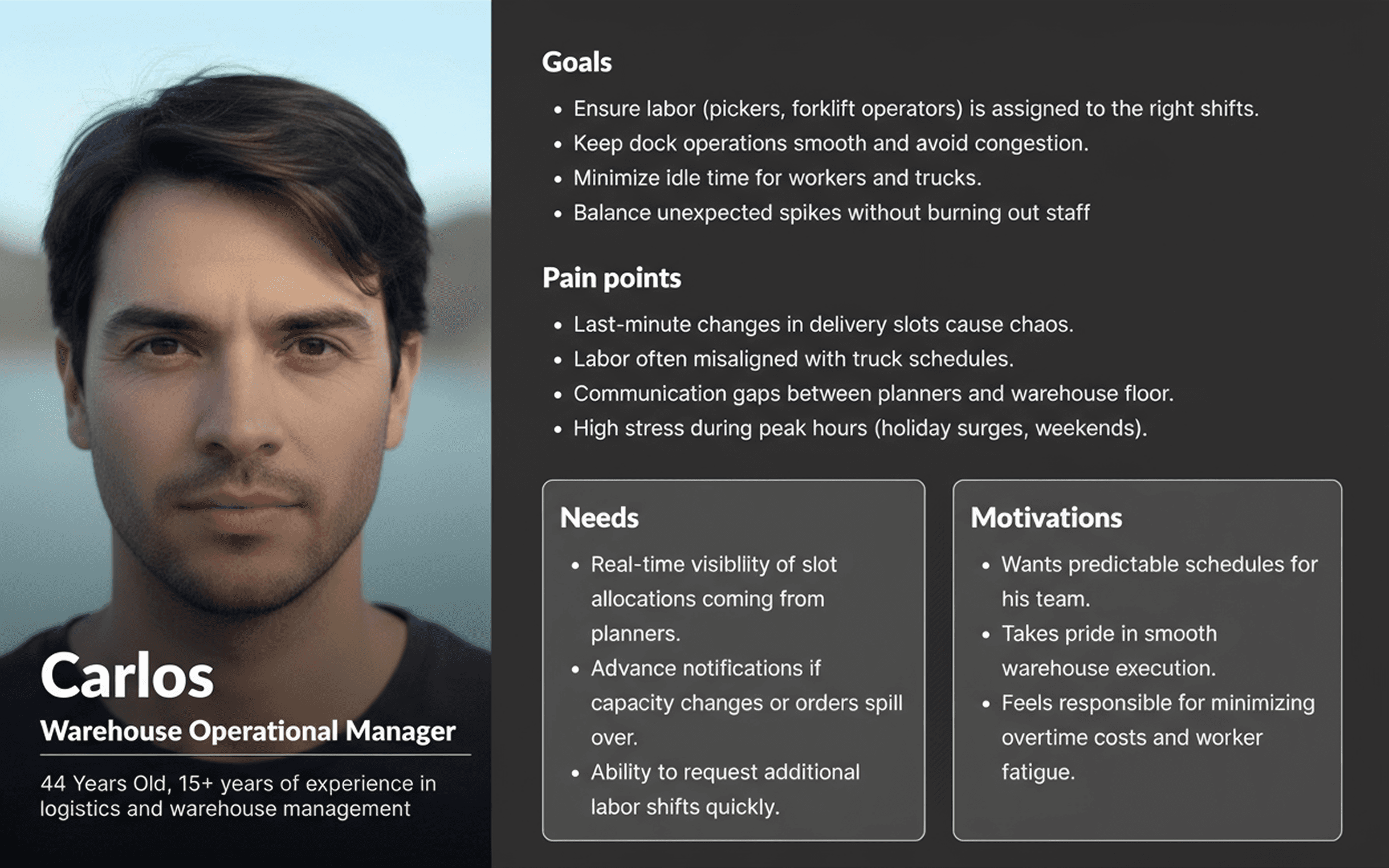
Personas
Empathy Map
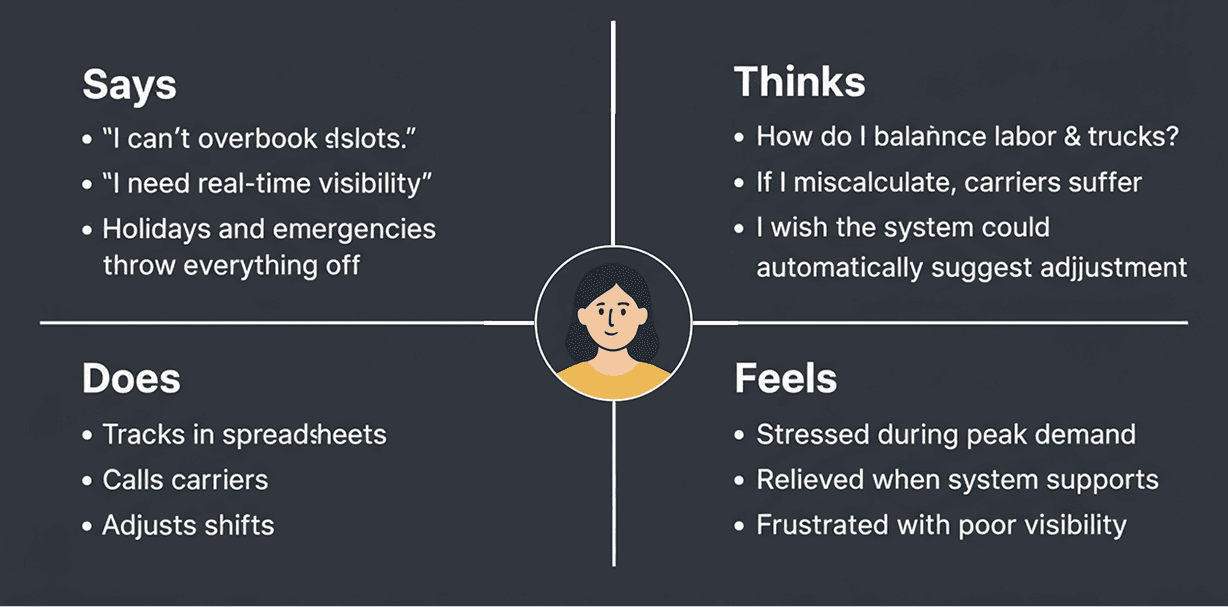
Storyboard
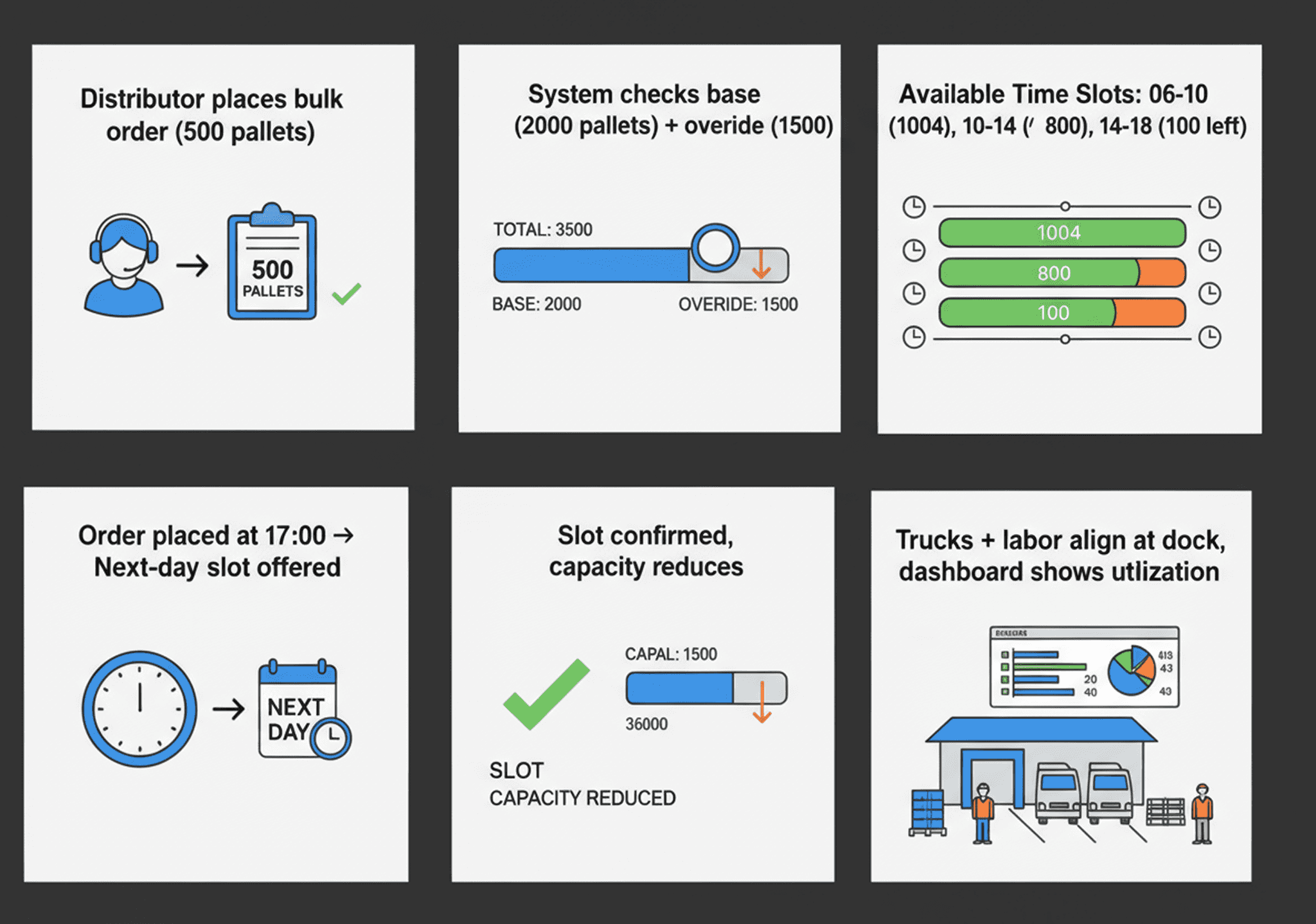
Journey map
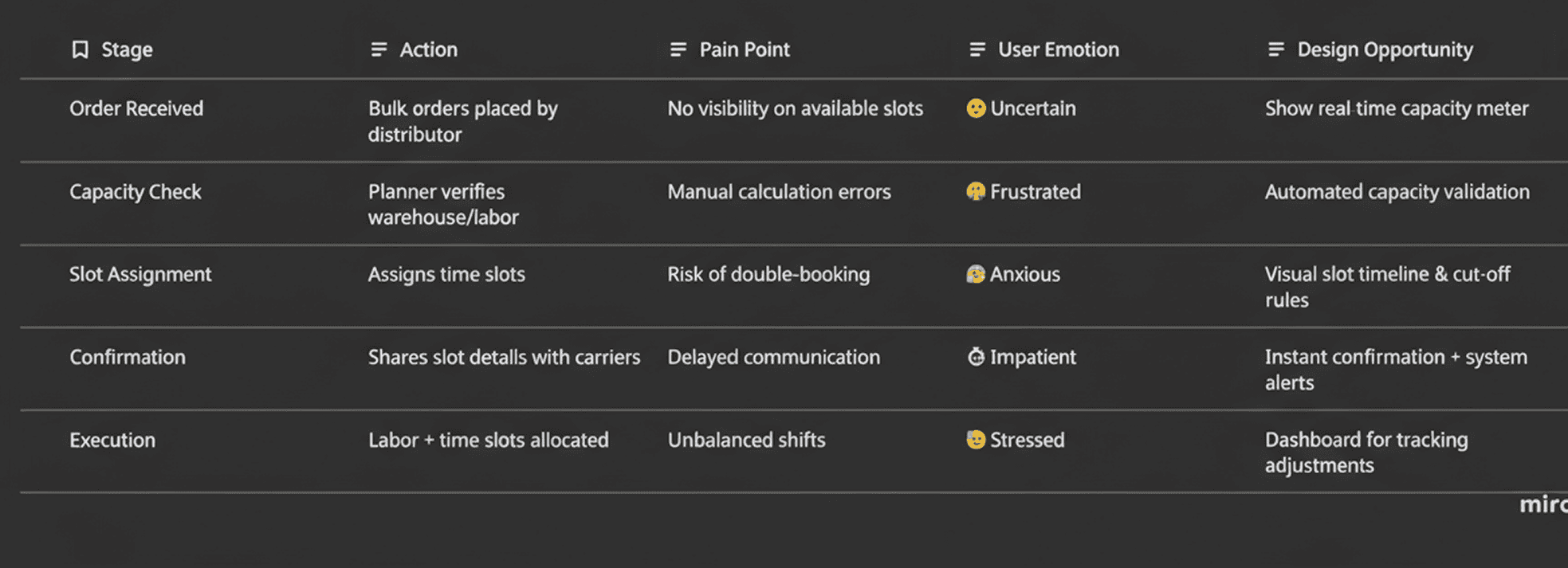
Competitive analysis
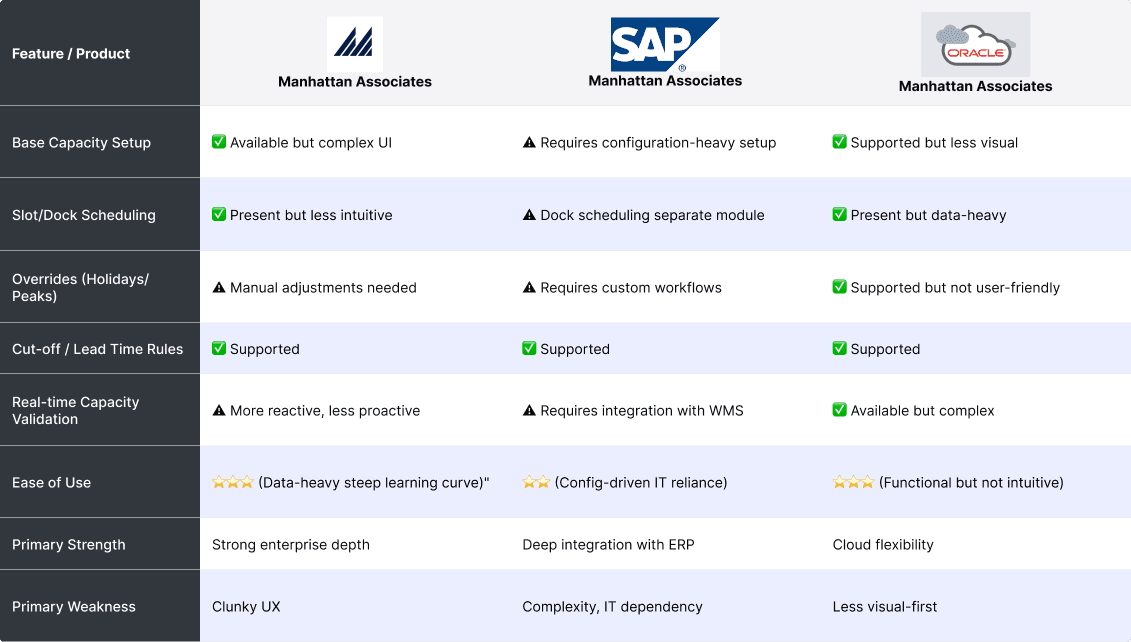
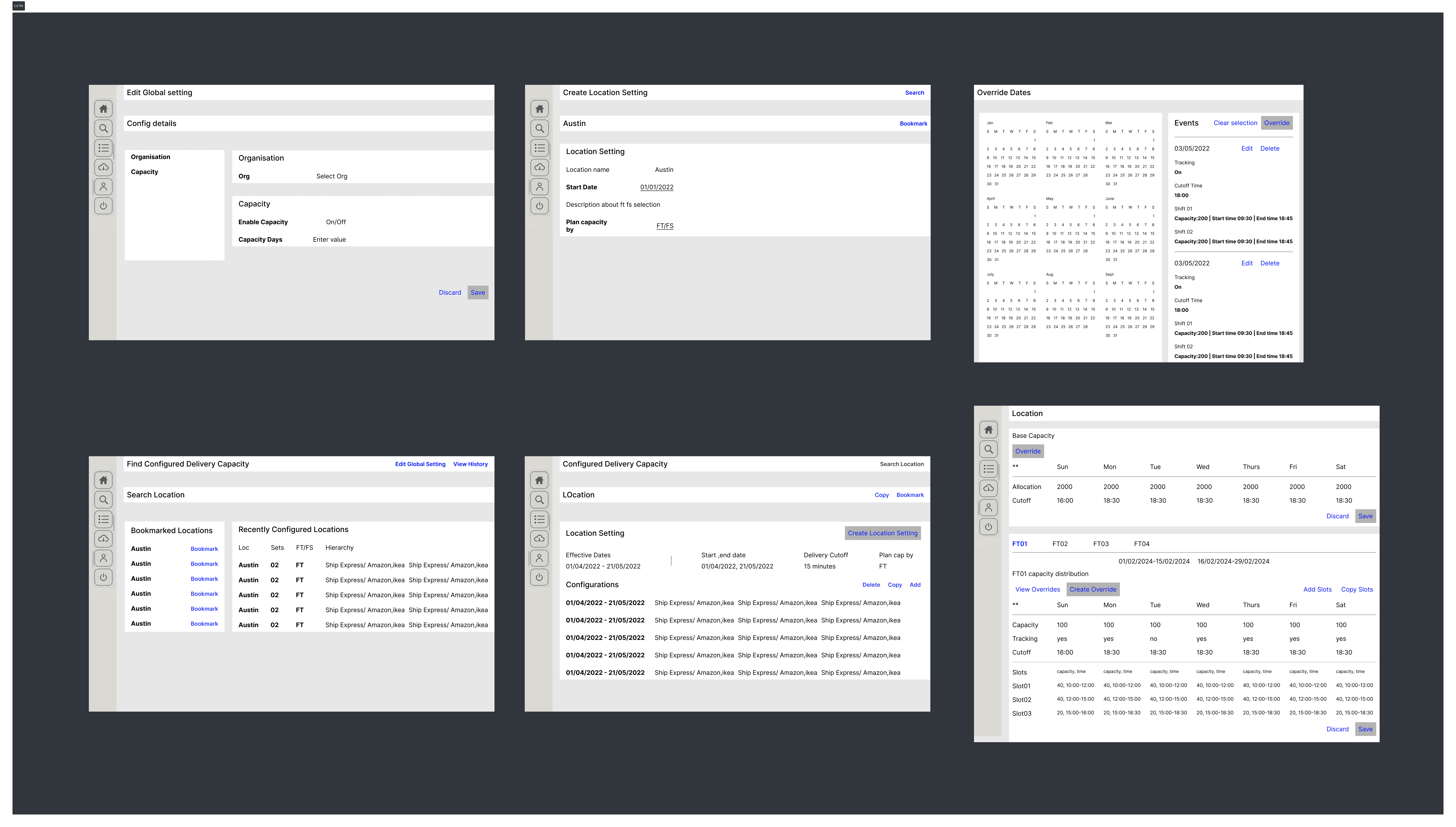
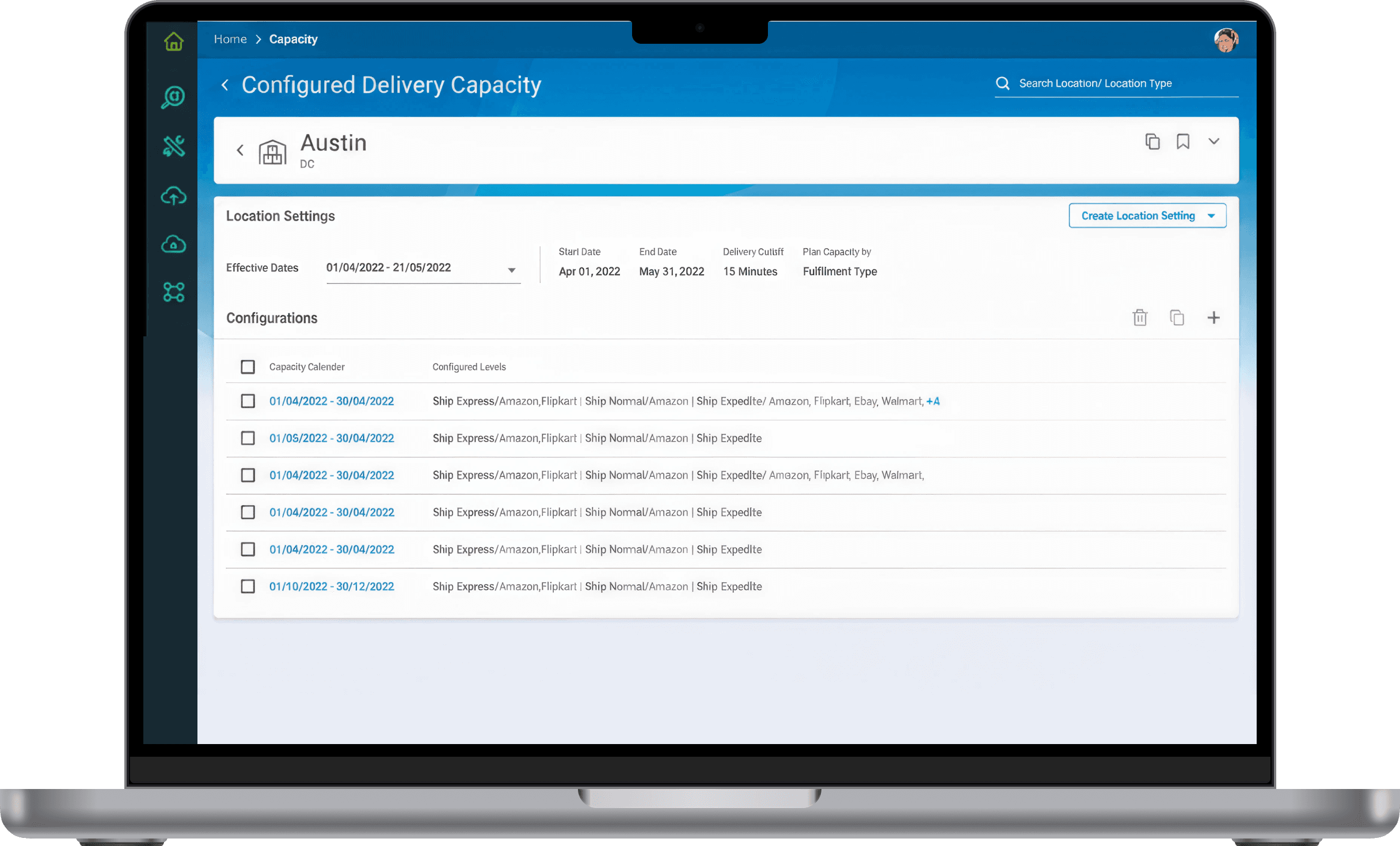
Wireframe & prototyping: I began with low-fidelity wireframes to map out the layout and user flow, collaborating closely with the team to refine the structure through multiple feedback cycles. Once the framework was validated, we developed a high-fidelity interactive prototype to test usability, visual hierarchy, and overall experience.

A few Lo-fi wireframes
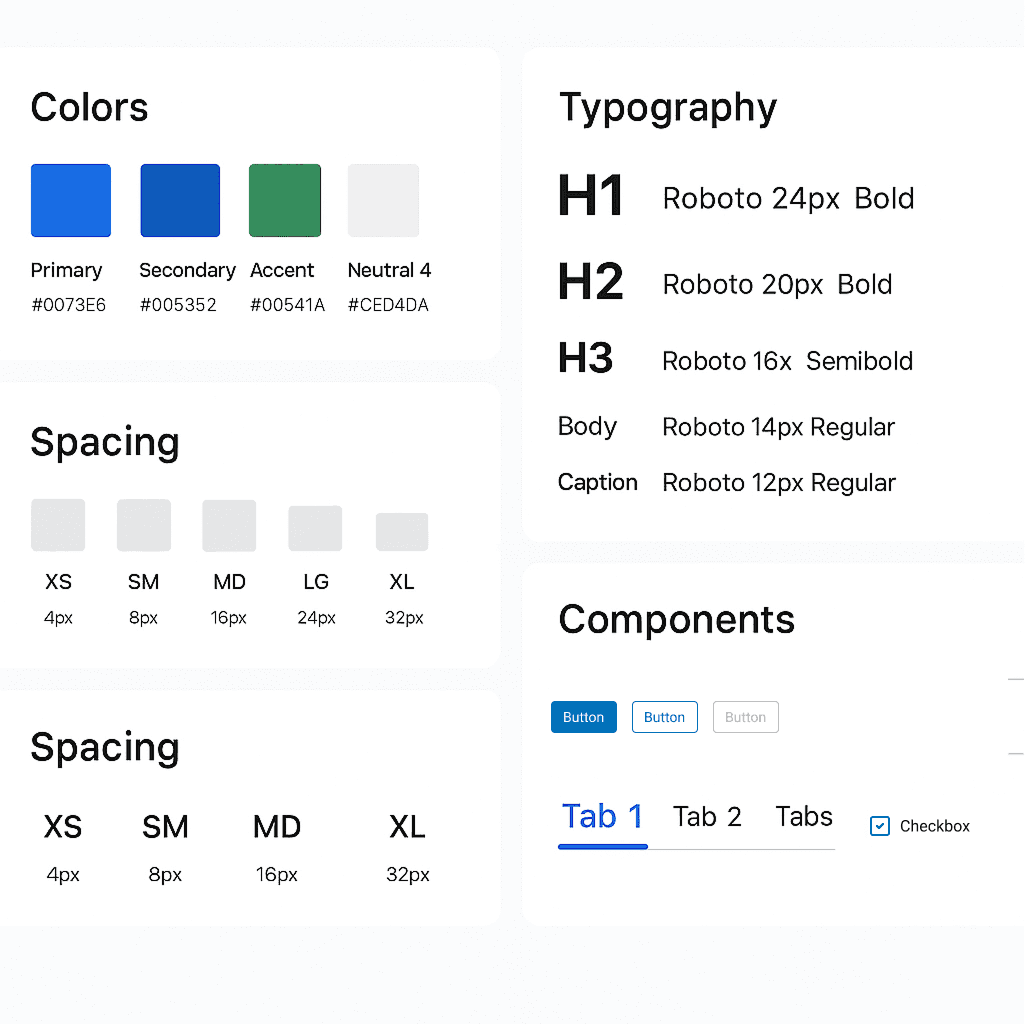
Visual Design & Style Guide: This project has a separate design system team. I had to use the cohesive visual language, including color schemes, typography, and iconography, ensuring consistency from the available DS. I created a sticker sheet with the required patterns(organs) as a quick access to the final design

Fraction of the Style guide
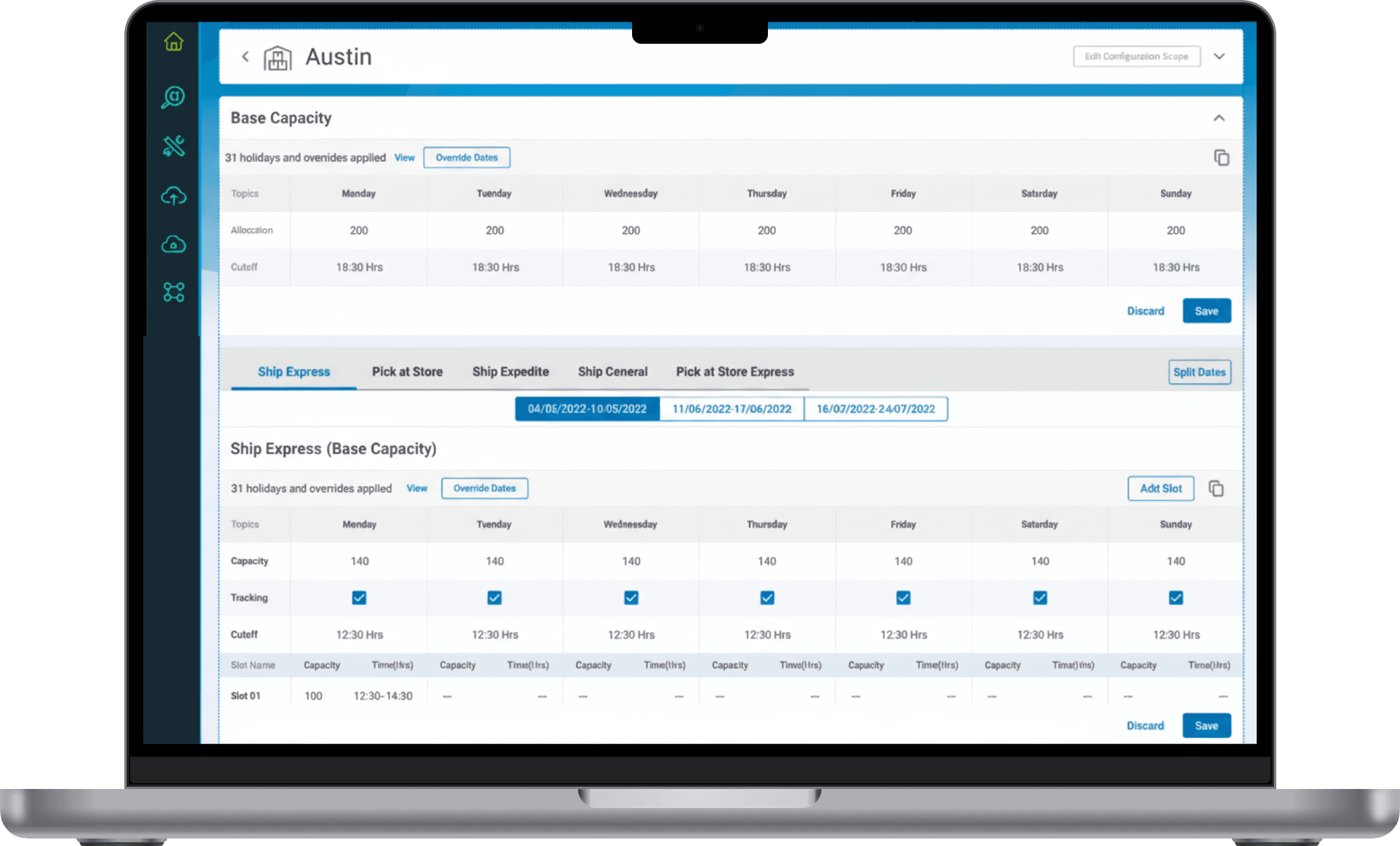
Final designs
Conclusion

This project showcased the power of human-centered design in simplifying enterprise complexity. By aligning user needs with business goals, we created a solution that’s both scalable and intuitive.